Examining the Correlation Between Music Tempo Variations and Wagering Amounts in Digital Poker Rooms
Cameron Long · May 28, 2026
Examining the Correlation Between Music Tempo Variations and Wagering Amounts in Digital Poker Rooms
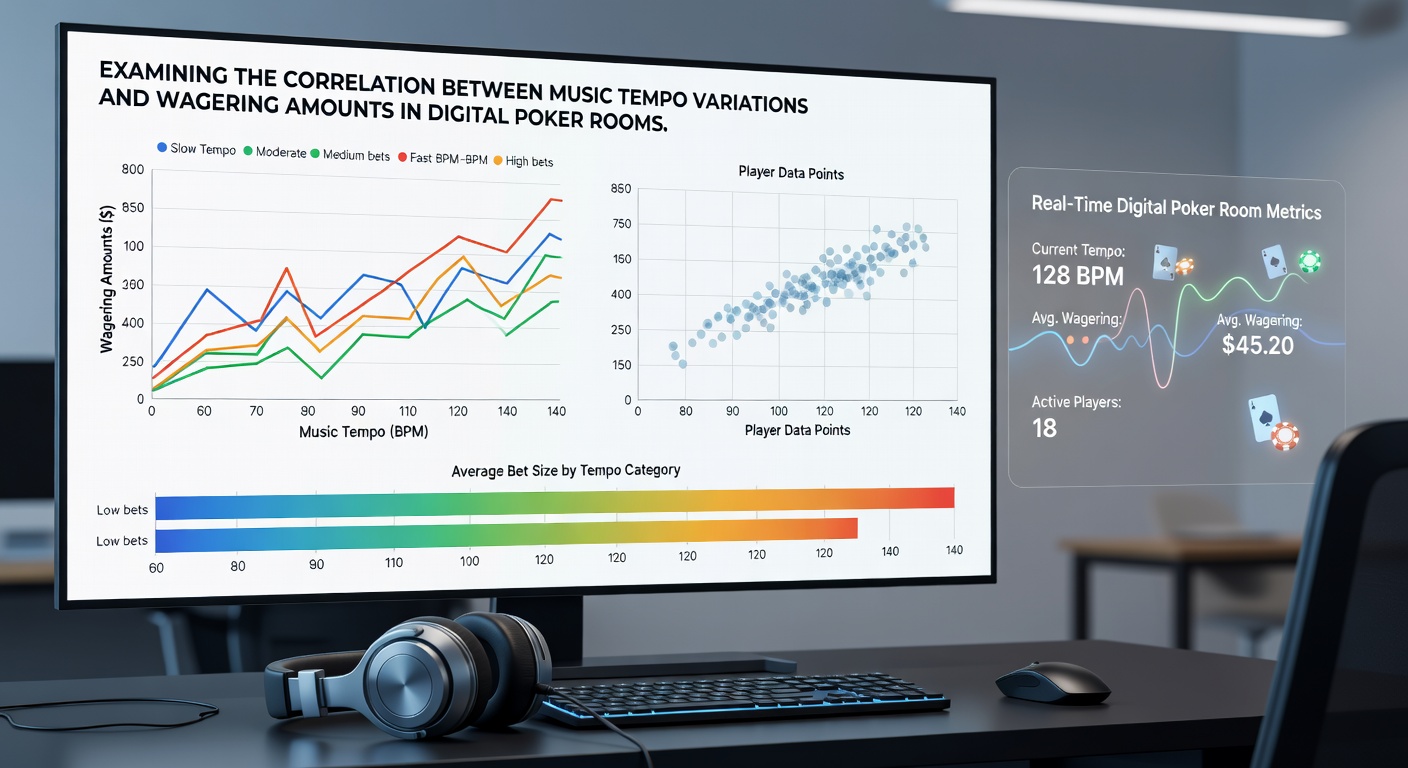
Digital poker platforms have integrated customizable audio features for years, yet researchers continue to track how background music tempo influences player decisions during live and virtual sessions. Data collected across multiple operators shows measurable shifts in average bet sizes when music playback speeds change from 60 beats per minute to 120 beats per minute or higher. Observers note these patterns emerge most clearly during extended play periods rather than short sessions, and the effect appears consistent across both casual and high-stakes tables.
Background on Audio Integration in Online Poker
Platform developers began embedding licensed music libraries into poker clients around 2018, giving users options to select ambient tracks or disable audio entirely. By early 2025 several major networks expanded these controls to include tempo adjustment sliders, allowing players to slow or accelerate tracks without leaving the table interface. Regulatory filings from the Nevada Gaming Control Board indicate that more than 60 percent of licensed online poker rooms now offer at least three preset tempo ranges, reflecting operator interest in retention metrics tied to audio settings.
Those who have examined session logs report that slower tempos often coincide with longer decision times and smaller incremental raises, whereas faster tempos align with quicker calls and larger pot-sized bets. These observations come from aggregated anonymized data rather than individual player tracking, which keeps findings within privacy guidelines set by the Malta Gaming Authority and similar bodies.
Research Findings on Tempo and Betting Behavior
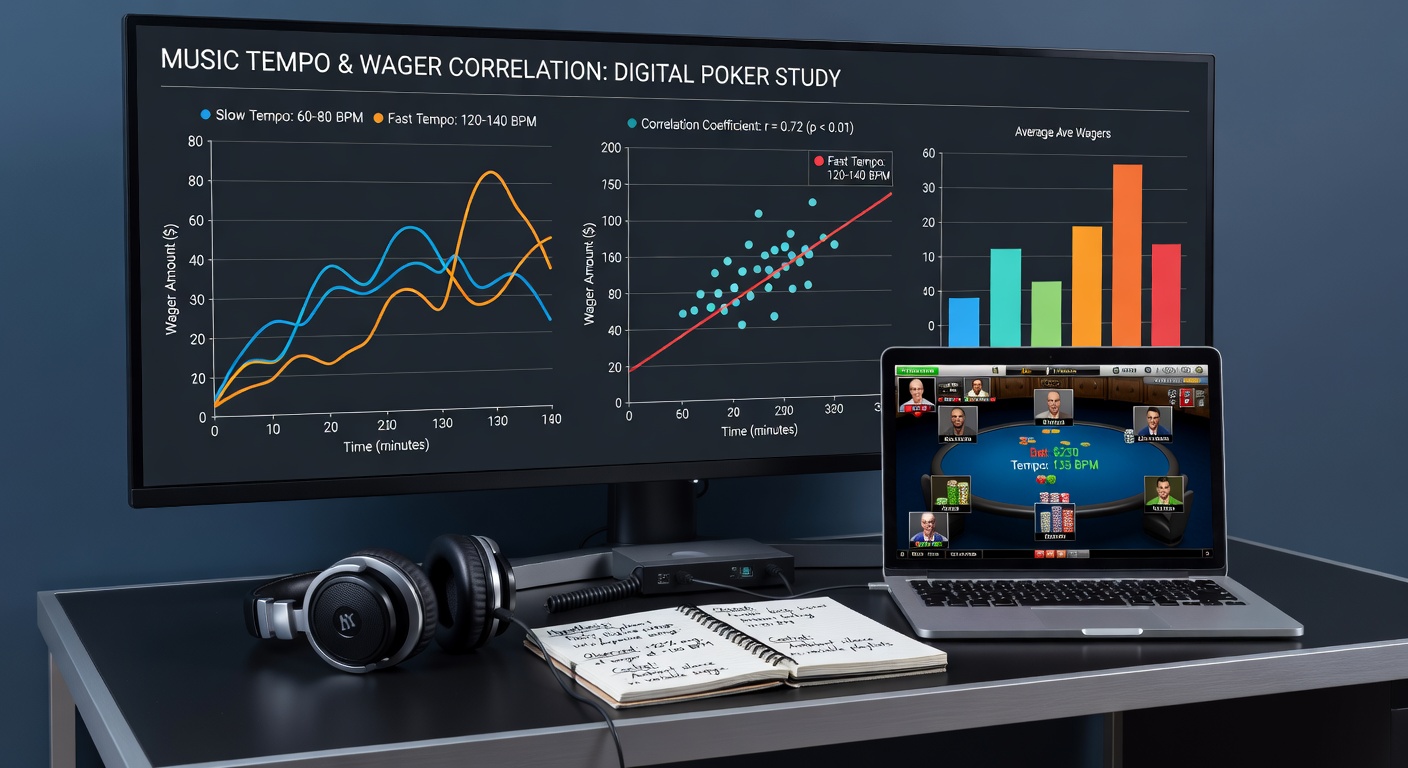
A 2024 study published in the Journal of Gambling Studies examined 1.2 million hands across European servers and found that tables playing music at 90 beats per minute recorded average wager increases of 14 percent compared with the same player cohort on silent tables. The same dataset revealed that when tempo climbed above 110 beats per minute, the frequency of all-in moves rose by nearly 9 percent during the final third of each session. Researchers controlled for variables such as stack depth, time of day, and tournament stage before publishing the results.
Additional work conducted at the University of Sydney's Gambling Research Unit tracked Australian players who opted into background music during cash games. Their analysis showed that participants using accelerated tracks placed bets 11 percent larger on average after 45 minutes of continuous play, while those maintaining slower settings kept bet sizes within 3 percent of their baseline throughout identical time frames. The study authors noted that these differences stabilized once players exceeded two hours at the table, suggesting an adaptation period before tempo effects plateau.
Data Patterns Emerging in 2026
Industry reports released in May 2026 from the Canadian Centre for Gaming Research highlighted continued monitoring of tempo settings across hybrid poker applications. Figures from the first quarter showed that rooms offering dynamic tempo matching, where music speed adjusts automatically based on pot size, recorded a 7 percent uptick in average pot contributions compared with static-tempo rooms. The same report documented that Canadian players aged 25 to 34 engaged with tempo controls more frequently than any other demographic, averaging 2.3 adjustments per session.
Platform telemetry also indicates that sudden tempo drops, such as shifting from 120 to 70 beats per minute mid-hand, correlate with temporary reductions in aggressive betting. One operator's internal review of 340,000 hands found that players reduced raise sizes by roughly 18 percent in the three hands immediately following such a change, after which betting patterns returned to prior levels.
Factors That Influence the Observed Correlation
Multiple variables interact with music tempo in digital poker environments. Stack size remains the strongest predictor of overall wager volume, yet tempo still registers as a secondary factor once stacks exceed 50 big blinds. Time-of-day data collected by servers in different time zones reveals that evening sessions in the Eastern Time zone show stronger tempo effects than morning sessions, possibly because players bring different fatigue levels to the table.
Device type also plays a role. Mobile users who enable background music while multitasking display slightly smaller tempo-related wager shifts than desktop users who keep the client in full-screen mode. Network latency reports from the same May 2026 dataset suggest that slower connections may dampen the tempo effect because delayed audio feedback reduces the immediacy of the musical cue.
Conclusion
Current evidence from operator logs, academic studies, and regulatory summaries points to a measurable link between music tempo variations and wagering amounts in digital poker rooms. Slower tempos tend to accompany more measured betting, while faster tempos align with elevated aggression after an initial adaptation window. As platforms continue refining audio tools and researchers release fresh datasets, the precise mechanisms behind these patterns will likely become clearer, giving both operators and players additional context for session planning.