Private Equity Activity Highlights Strategic Shifts in Casino Operations
Cameron Long · Jul 9, 2026

Private Equity Activity Highlights Strategic Shifts in Casino Operations
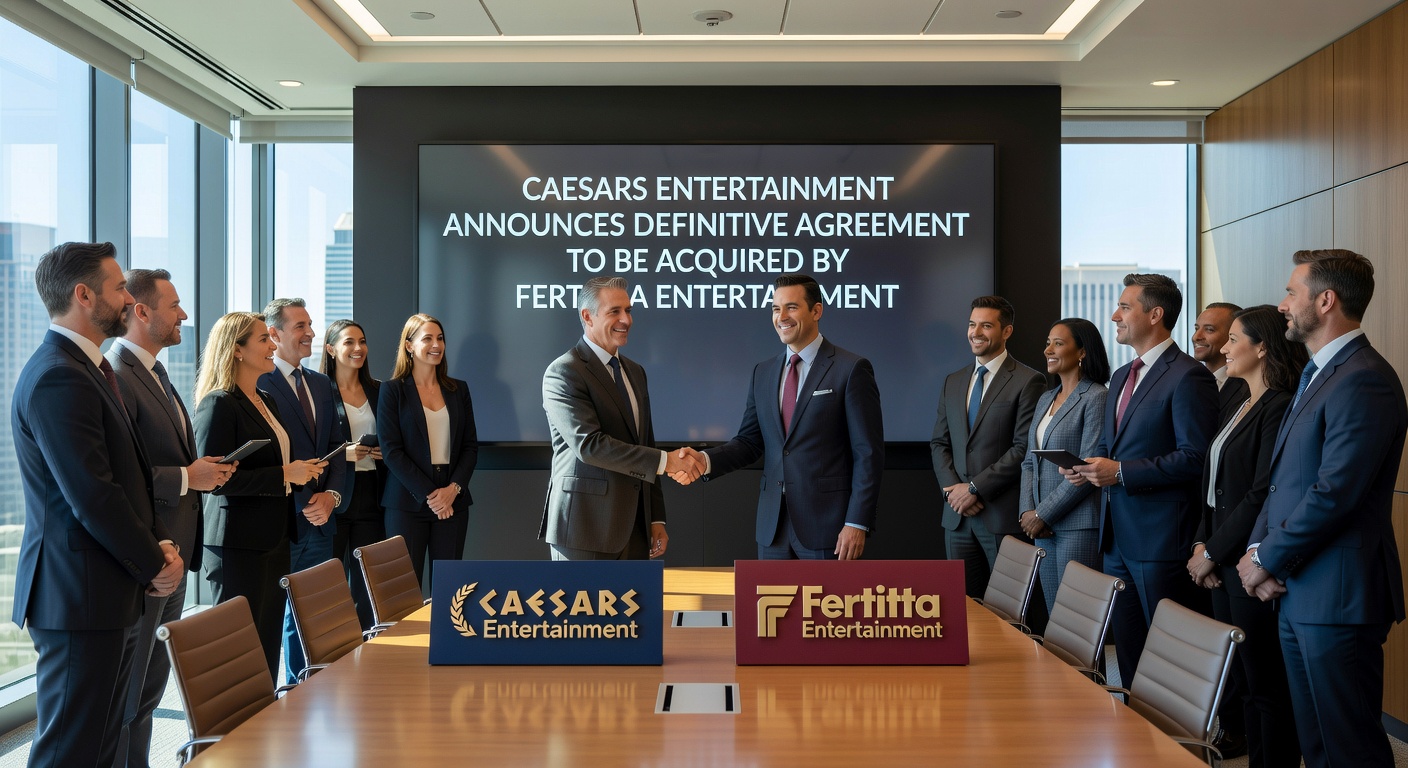
Billionaire Tilman Fertitta submitted a $17.6 billion proposal to acquire Caesars Entertainment and convert the publicly traded company into a private entity, while media executive Barry Diller’s People Inc. followed with a substantial investment in the Las Vegas casino market less than seven days later. These transactions occurred amid broader discussions about operators evaluating structures away from public market requirements, and figures from regulatory filings show consistent sector performance through mid-2026.
Details of the Acquisition Proposal
Fertitta’s offer targets full ownership of Caesars Entertainment, a company that operates multiple properties across the United States including several on the Las Vegas Strip. The $17.6 billion figure covers equity value plus assumed debt, according to documents referenced in financial disclosures filed in July 2026. Caesars maintains a portfolio that includes integrated resorts with hotel, gaming, and entertainment components, and the proposal would remove the company from stock exchange listings if completed.
Regulatory oversight for such a transaction falls under the Nevada Gaming Control Board, which reviews ownership changes for compliance with state licensing standards. Historical data from the board indicates that similar privatization efforts by other operators have required 12 to 18 months for full approval processes. Fertitta, who already controls the Golden Nugget brand, would integrate Caesars properties into existing holdings upon successful closing.
Subsequent Investment by People Inc.
People Inc., led by Barry Diller, announced an expanded position in Las Vegas casino assets shortly after the Fertitta bid became public. The move represents a larger capital commitment than the initial $17.6 billion figure when measured across equity and development commitments, based on company statements released in early July 2026. This action aligns with patterns where institutional investors increase exposure to regional gaming markets during periods of ownership restructuring.
Market analysts tracking ownership filings note that People Inc. has directed resources toward venues emphasizing live entertainment alongside traditional table games and slots. Revenue reports submitted to the Nevada Gaming Control Board for the first half of 2026 show year-over-year growth in visitor spending at properties with diversified non-gaming attractions. Diller’s organization has previously participated in media and hospitality sectors, and this latest allocation extends that portfolio into direct casino operations.
Context Around Public to Private Transitions
Multiple casino operators have examined privatization strategies in recent years as public market reporting obligations increase administrative costs. Data compiled by the American Gaming Association indicates that private ownership can allow faster decision cycles on capital expenditures for property renovations and technology upgrades. Caesars Entertainment itself reported adjusted EBITDA figures exceeding $2.8 billion in its most recent annual filing prior to the offer announcement.
People Inc.’s investment timing coincides with these structural considerations. Industry reports from the University of Nevada, Las Vegas Center for Gaming Research document rising institutional interest in Las Vegas assets, with transaction volumes for major properties increasing 14 percent between 2024 and 2025. The combined activity from Fertitta and Diller underscores continued capital availability for large-scale gaming enterprises despite shifts in ownership models.
Regulatory and Market Considerations
Any change in control at Caesars would require separate approvals from gaming authorities in each state where the company holds licenses, including New Jersey, Pennsylvania, and Mississippi. The Nevada Gaming Control Board maintains public records of ownership applications, and observers note that background investigations for principal investors typically extend several months. People Inc. has stated that its Las Vegas commitments comply with existing regulatory frameworks without requiring immediate ownership transfers.
Financial metrics released by Caesars prior to the bid showed stable visitation numbers through the second quarter of 2026, supported by convention traffic and leisure travel. Broader sector data from state gaming commissions reveal that Las Vegas Strip properties collectively generated over $8.9 billion in gross gaming revenue during the trailing twelve months ending June 2026.
Conclusion
The sequence of Fertitta’s $17.6 billion privatization offer followed by People Inc.’s expanded Las Vegas position illustrates active private capital engagement with established casino operators. Documentation from regulatory bodies and company disclosures provides the primary record of these developments through July 2026, while transaction timelines remain subject to standard approval procedures across multiple jurisdictions.