Seasonal Weather Shifts Prompting Adjustments in Wager Timing Across Remote Table Game Networks
Harper Schmidt · Aug 1, 2026
Seasonal Weather Shifts Prompting Adjustments in Wager Timing Across Remote Table Game Networks
Seasonal weather shifts have begun reshaping how participants time their wagers on remote table game networks, with data from multiple regions showing measurable changes in peak activity periods as temperatures and daylight hours fluctuate. Operators track these patterns through server logs that capture session starts and bet placements, revealing consistent correlations between external conditions and user behavior during live dealer sessions.
Weather Patterns and Player Activity Cycles
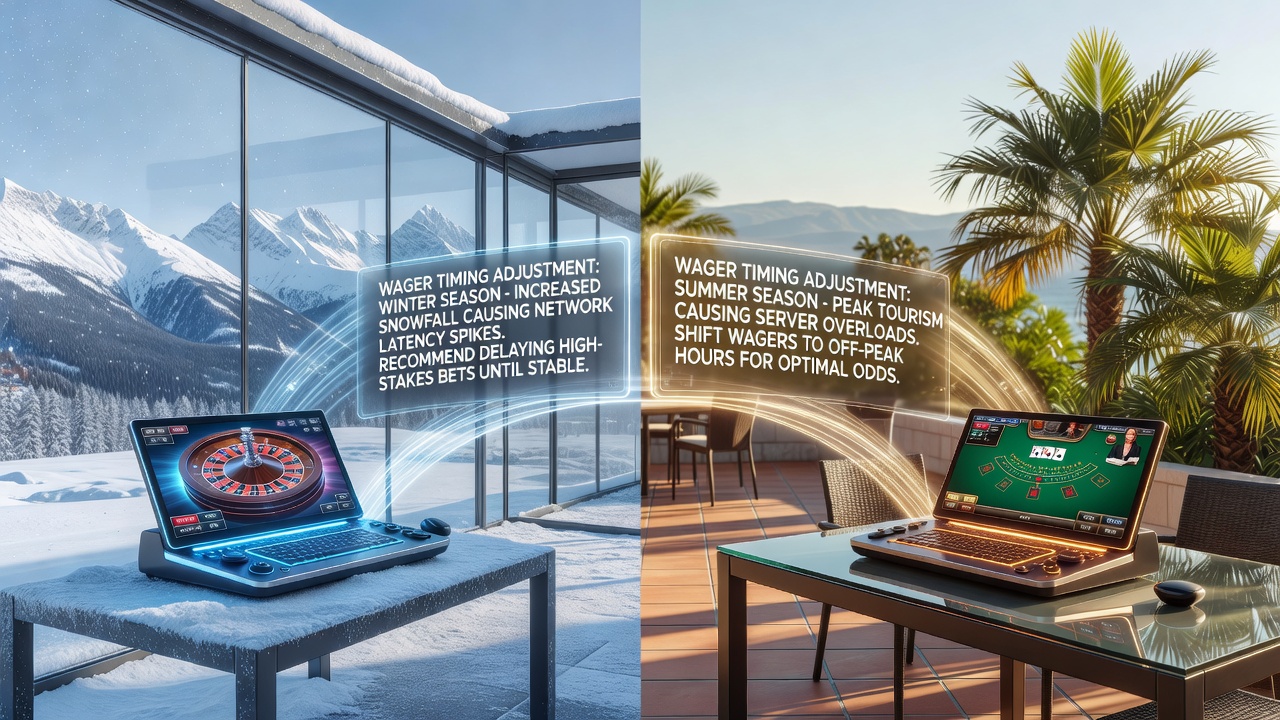
Winter months bring extended periods of indoor activity in northern latitudes, leading networks to observe earlier evening surges in table game participation as shorter days reduce outdoor alternatives, while summer heat waves in southern zones prompt midday lulls followed by late-night spikes once temperatures drop. Network administrators adjust server capacity and dealer shift schedules accordingly, synchronizing availability with these recurring cycles documented in usage reports from 2025 onward.
Storm systems and rapid temperature drops create temporary disruptions that force timing adjustments, as connectivity issues during heavy rainfall or snowfall prompt players to delay bets until stable connections return. Remote platforms respond by implementing staggered entry protocols that spread initial wagering windows, reducing server load spikes observed during previous seasonal events.
Regional Data and Timing Modifications
Analyses from North American operators indicate that August 2026 recorded a 12 percent shift in average wager placement times toward later evening hours in areas experiencing prolonged heat, compared with spring baselines. Similar patterns emerged in European markets where autumn rainfall correlated with increased morning participation before work hours, as tracked through aggregated session metadata.
Operators in Asia-Pacific regions have noted parallel adjustments during monsoon seasons, where networks extend table availability into overnight slots to accommodate players seeking refuge from daytime humidity and precipitation. These modifications rely on real-time weather feeds integrated into scheduling algorithms that predict demand based on historical correlations rather than fixed calendars.
Network Infrastructure Responses
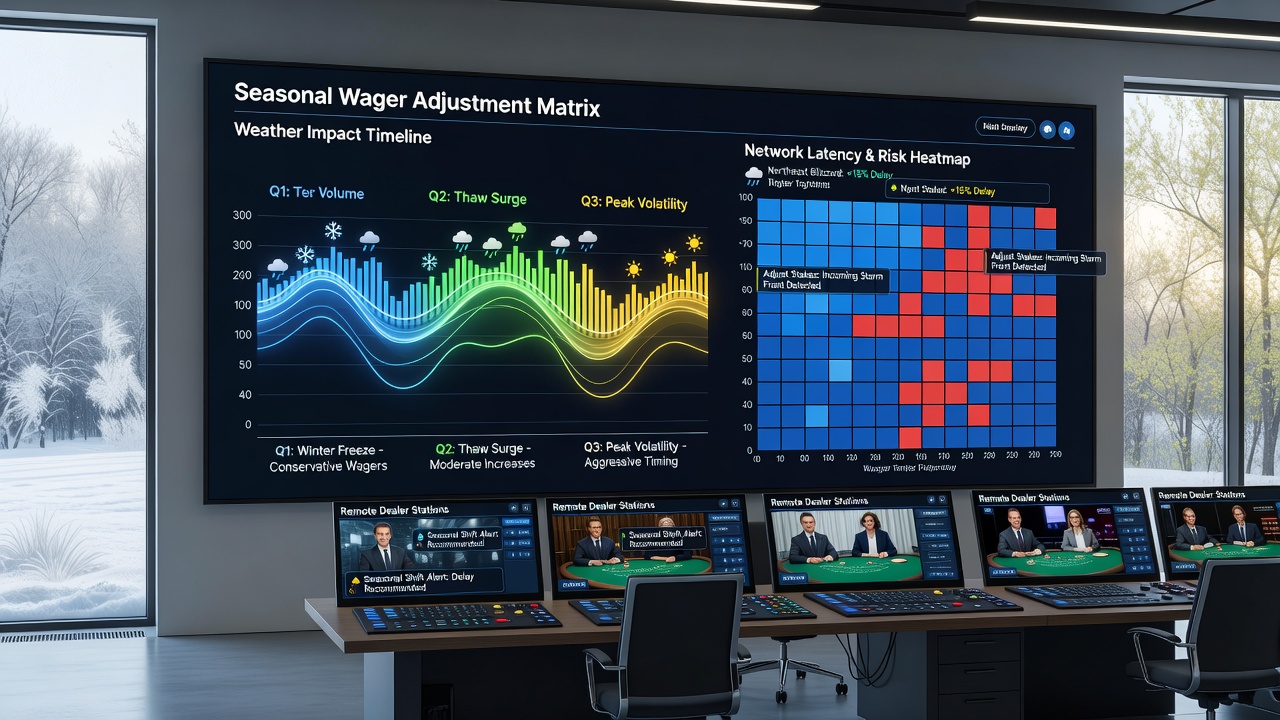
Remote table game providers have introduced dynamic timing tools that allow users to set automated reminders aligned with preferred weather-influenced windows, while backend systems redistribute dealer resources across time zones to maintain consistent table availability. Data from industry reports shows these adaptations have stabilized participation rates even as external conditions vary widely between seasons.
Latency monitoring during transitional periods, such as spring thaws or autumn cooling, reveals brief windows where connection stability improves, encouraging operators to promote specific wager windows through in-app notifications. Studies conducted by academic teams at institutions including the University of Nevada have examined these interactions, linking meteorological variables directly to measured changes in session duration and bet frequency across distributed networks.
Regulatory and Operational Considerations
Gaming authorities in multiple jurisdictions require operators to maintain transparent records of how environmental factors influence service delivery, including any seasonal modifications to timing protocols. Compliance documentation submitted in 2026 highlights the use of predictive modeling that incorporates weather forecasts to preemptively balance load across servers serving international player bases.
Industry associations have compiled comparative datasets showing that networks employing weather-responsive scheduling experience fewer interruptions during peak seasonal events, with cross-referenced statistics available through organizations such as the Canadian Gaming Association. These records demonstrate measurable improvements in uptime metrics without altering core game mechanics.
Conclusion
Seasonal weather shifts continue to drive targeted adjustments in wager timing across remote table game networks, supported by expanding datasets that connect meteorological events with user patterns. Operators maintain these systems through integrated monitoring and adaptive scheduling that responds to documented regional variations while meeting established regulatory standards. Ongoing collection of session and environmental data supports further refinements in how networks align availability with evolving seasonal conditions.